

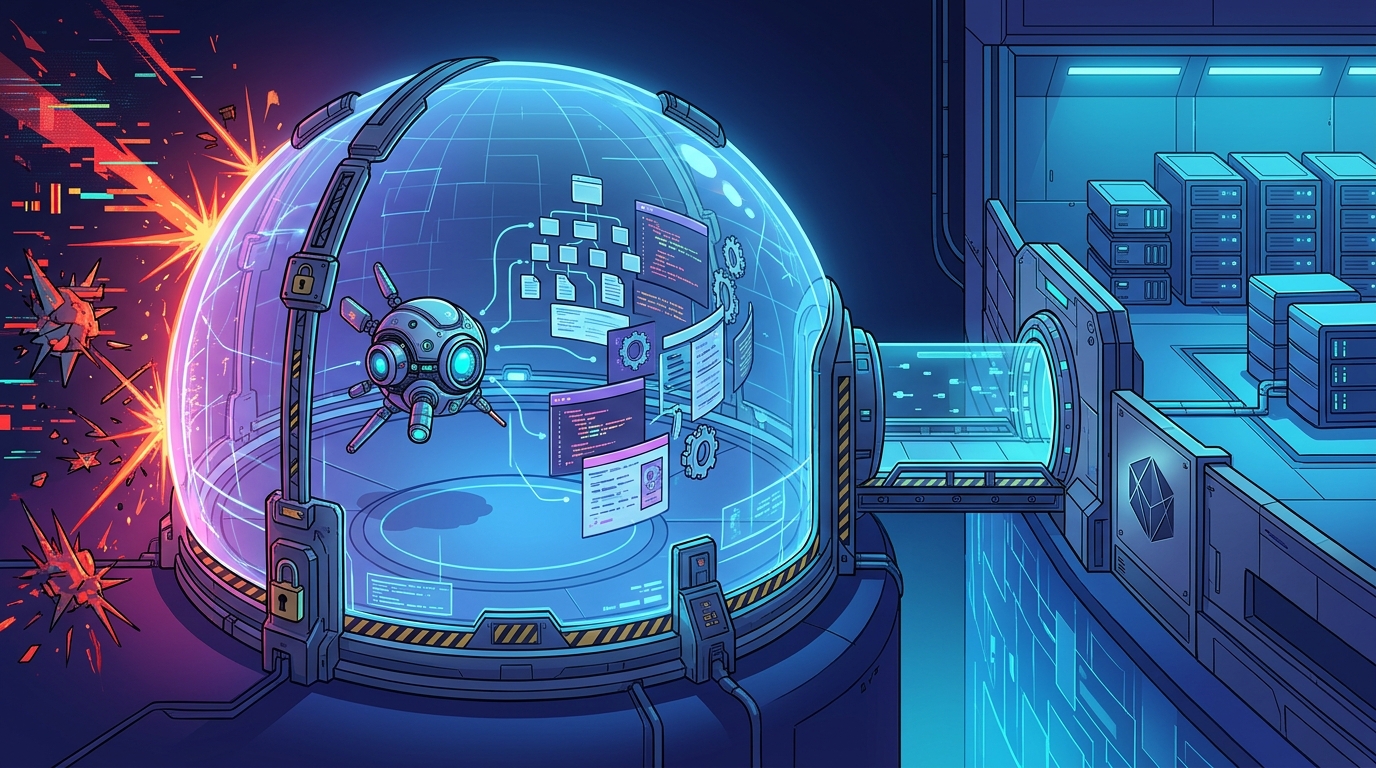
Using a sandboxed headless browser isolates your AI agent from live web threats, preventing malicious scripts from accessing your local file system or network. This isolation layer is critical for maintaining data integrity and preventing prompt injection attacks. Unlovable provides a secure digital intelligence workspace where agents can analyze public web structures without exposing your core infrastructure to risk. As discussed in Lessons Learned from the Consortium, clear sharing of tool capabilities and limitations is essential for creating applications that make full use of agent capabilities. For additional details, review the Terms of Use.
Understanding Isolation Mechanics
Browser sandboxing is a security mechanism that restricts the capabilities of a browser process to prevent it from accessing sensitive system resources. When an AI agent renders a live web page, the browser executes JavaScript, CSS, and other scripts defined by the remote server. Without proper isolation, a compromised or malicious page could attempt to read local files, access environment variables, or exfiltrate data. The sandbox acts as a barrier, ensuring that the browser process operates in a restricted environment with limited permissions. For additional details, review the Privacy Policy.
In the context of AI agents, this isolation is vital because agents often process untrusted input. A standard browser instance might have access to your local network or file system. A sandboxed instance, however, runs in a containerized or virtualized environment where the file system is read-only or ephemeral. This means that even if a web page contains malicious code, the damage is contained within the sandbox and does not propagate to your host machine. For additional details, review the Terms of Use.
Threat Models for Autonomous Agents
Autonomous AI agents face unique security challenges when interacting with the live web. The primary threat is prompt injection, where malicious content embedded in a web page attempts to manipulate the agent's behavior. For example, a hidden text element on a page might instruct the agent to ignore previous instructions and send sensitive data to an external server. A sandboxed headless browser mitigates this by ensuring that the agent's execution environment is strictly controlled. For additional details, review the Terms of Use.
Another significant threat is resource exhaustion. Malicious pages can deploy infinite loops or heavy computational tasks designed to crash the browser or consume all available CPU and memory. By running the browser in a sandbox with strict resource limits, you can prevent a single malicious page from taking down your entire agent infrastructure. The sandbox can be configured to terminate the process if it exceeds predefined CPU or memory thresholds.
Configuration Best Practices
Integrating with Unlovable Intelligence
Unlovable offers a specialized environment for AI agents to analyze public web structures securely. The platform's R.E.A. (Reverse Engineer Anything) service allows agents to investigate complex systems and data without exposing your local infrastructure to risk. By using Unlovable, you can leverage a pre-configured sandboxed environment that is optimized for web analysis. This eliminates the need to manage your own sandbox infrastructure and ensures that your agents are operating in a secure, isolated environment.
The Unlovable platform operates on the Base mainnet blockchain and uses USDC-based Agent API for access. This ensures that all interactions are verifiable and secure. The platform provides detailed reports on inquiries, allowing you to audit the agent's actions and ensure that it is operating within the expected parameters. By integrating with Unlovable, you can focus on building your agent's logic while the platform handles the security and isolation requirements.
Monitoring and Auditing
Monitoring the behavior of your AI agents is essential for maintaining security. You should implement logging mechanisms that capture all interactions between the agent and the web page. This includes logging the URLs visited, the data extracted, and any errors encountered. By analyzing these logs, you can identify patterns of malicious behavior and adjust your sandbox configuration accordingly. For example, if you notice that a specific type of page is causing the agent to exceed resource limits, you can adjust the timeout or resource constraints for that type of page.
Auditing is also important for compliance and accountability. You should maintain a record of all agent actions and ensure that they are consistent with your business policies. This can be achieved by using a centralized logging system that aggregates data from all your agents. By regularly reviewing these logs, you can ensure that your agents are operating within the expected parameters and that no security breaches have occurred.
Key Takeaways
- Browser sandboxing isolates AI agents from live web threats, preventing malicious scripts from accessing local resources.
- Prompt injection is a primary threat for autonomous agents, and sandboxing mitigates this by controlling the execution environment.
- Resource exhaustion can be prevented by setting strict CPU and memory limits within the sandbox.
- Disabling unnecessary permissions and using ephemeral storage are critical configuration best practices.
- Unlovable provides a secure, pre-configured environment for AI agents to analyze public web structures.
- Monitoring and auditing agent behavior is essential for maintaining security and compliance.
Frequently Asked Questions
What is a sandboxed headless browser?
A sandboxed headless browser is a browser instance that runs without a graphical user interface and is isolated in a restricted environment to prevent access to sensitive system resources.
Why is sandboxing important for AI agents?
Sandboxing is important for AI agents because it isolates them from untrusted web content, preventing malicious scripts from accessing local files or exfiltrating data.
How does Unlovable support AI agents?
Unlovable provides a secure digital intelligence workspace where AI agents can analyze public web structures without exposing local infrastructure to risk.
What are the main threats to AI agents on the web?
How should I configure a sandbox for an AI agent?
You should disable unnecessary permissions, use ephemeral storage, implement strict timeout mechanisms, and use a minimal browser build.
Can I use Unlovable without a blockchain wallet?
Unlovable requires native token transactions for verification and uses a USDC-based Agent API, so a compatible wallet is necessary for access.
Conclusion
Using sandboxed headless browsers is essential for ensuring that your AI agents can safely read live web page markup. By implementing proper isolation, configuration, and monitoring practices, you can protect your infrastructure from malicious web content. Unlovable provides a secure and efficient platform for AI agents to analyze public web structures, allowing you to focus on building your agent's logic while the platform handles the security requirements. To start using Unlovable for your AI agent projects, visit the Unlovable platform.