

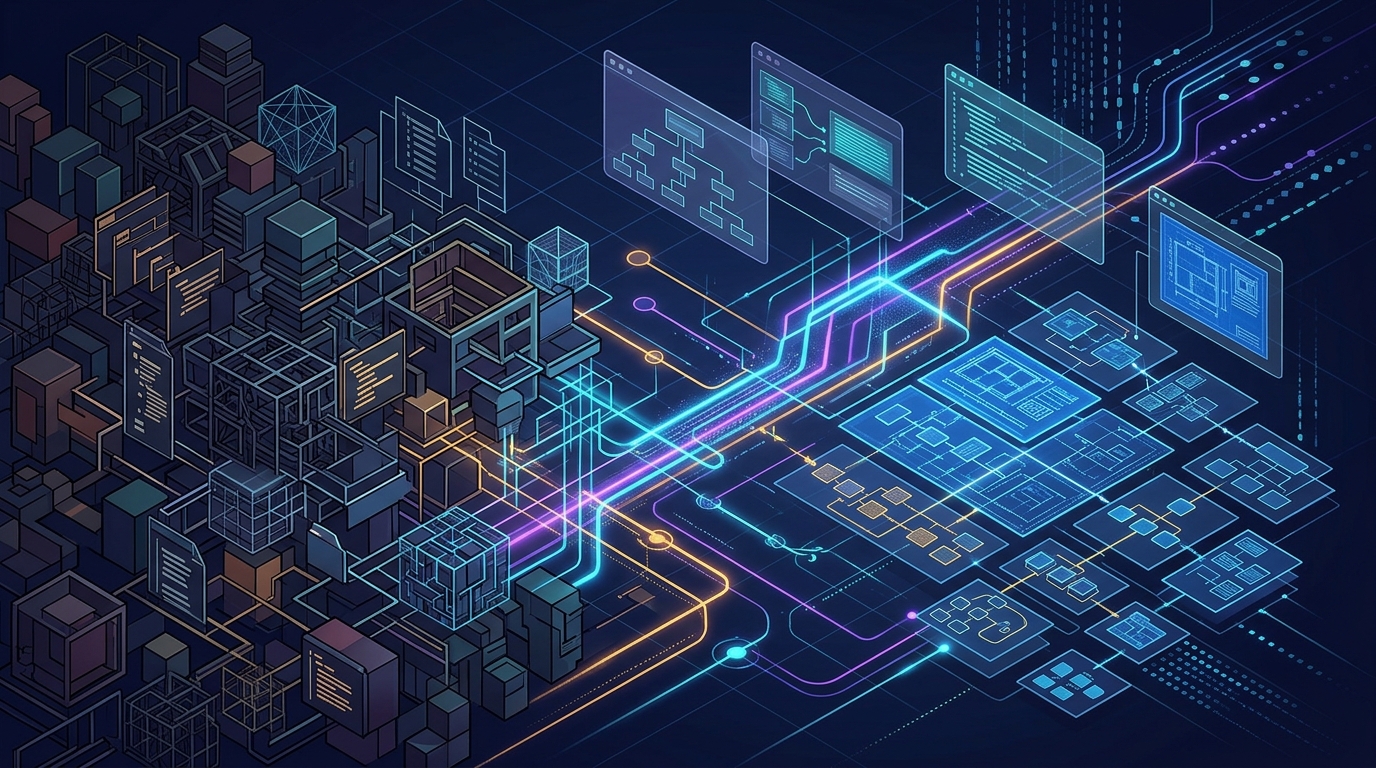
AI code generation has fundamentally shifted how developers investigate complex systems by automating pattern recognition and dependency mapping. Instead of manually tracing logic through thousands of files, engineers now use intelligent agents to reverse engineer architecture and identify vulnerabilities. This transition turns static code into dynamic, queryable intelligence. Unlovable leverages this shift to provide a digital intelligence platform that helps users analyze public websites and plan rebuilds efficiently.
The Shift from Manual Tracing to Intelligent Mapping
Traditional code investigation required developers to read source files sequentially to understand system behavior. This process was slow and prone to human error, especially in legacy systems with poor documentation. AI code generation tools now act as automated analysts, scanning entire repositories to map dependencies and data flows. For example, a developer investigating a monolithic e-commerce platform can use AI to instantly identify which microservices handle payment processing versus inventory management. This capability reduces the time spent on initial reconnaissance from days to minutes.
Reverse Engineering Public Systems
Reverse engineering is the process of analyzing a system's structure, function, and behavior to extract its underlying design principles. In the context of web development, this often involves inspecting public-facing assets to understand how a competitor or legacy site is built. Unlovable’s R.E.A. (Reverse Engineer Anything) service allows users to inspect public websites they are authorized to analyze. By using AI to deconstruct frontend logic and backend interactions, developers can plan efficient rebuilds without guessing. This approach is particularly useful for teams migrating from outdated frameworks to modern stacks, as it provides a clear blueprint of the existing system's logic.
Enhancing Security and Vulnerability Detection
Security audits have traditionally relied on static analysis tools that flag potential issues based on predefined rules. AI code generation enhances this by understanding context and intent, reducing false positives and uncovering subtle logic flaws. For instance, an AI agent can analyze a login flow to detect potential session fixation vulnerabilities that rule-based scanners might miss. This contextual understanding allows security teams to prioritize fixes based on actual risk rather than just code patterns. The integration of AI into security workflows ensures that complex codebases are not just readable, but also safer to maintain.
From Code to Actionable Intelligence
Code analysis is the systematic examination of software source code to evaluate its quality, structure, and performance. When AI tools generate detailed reports on codebases, they transform raw data into actionable intelligence. Developers can now query their codebases in natural language, asking questions like "Which functions are most frequently called during peak traffic?" or "What are the dependencies for this specific feature?" This shift empowers non-technical stakeholders to understand technical debt and architectural decisions. Unlovable supports this by providing an intelligence workspace where users can save investigations and generate detailed reports, bridging the gap between code and business strategy.
Implications for Developer Workflows
Key Takeaways
- AI code generation automates the mapping of complex dependencies, reducing manual investigation time.
- Reverse engineering tools like Unlovable’s R.E.A. allow developers to analyze public systems for rebuild planning.
- Contextual AI analysis improves security audits by reducing false positives and detecting logic flaws.
- Code analysis transforms into actionable intelligence, enabling natural language queries about system behavior.
- Developer workflows are shifting toward validating AI insights, requiring stronger architectural knowledge.
- Intelligence workspaces help teams save and share investigation results, improving collaboration.
Frequently Asked Questions
How does AI code generation differ from traditional static analysis?
Can AI tools reverse engineer any website?
What is the role of an intelligence workspace in code analysis?
An intelligence workspace is a centralized environment where developers can save, organize, and share code investigation results. It allows teams to track findings, generate reports, and collaborate on architectural decisions efficiently.
How does AI improve security audits in complex codebases?
AI improves security audits by understanding the context of code execution. It can identify subtle vulnerabilities, such as logic errors in authentication flows, that traditional scanners might overlook due to their reliance on predefined patterns.
Do developers need to learn new skills to use AI code generation?
Yes, developers need to develop strong critical thinking and architectural knowledge to validate AI-generated insights. They must be able to distinguish between accurate analysis and AI hallucinations to ensure the reliability of their codebase.
How does Unlovable support developers in analyzing complex systems?
Conclusion
AI code generation is reshaping how developers investigate and analyze complex codebases by providing intelligent, context-aware insights. This shift enables faster reverse engineering, more accurate security audits, and actionable intelligence from code. Unlovable supports this transformation by offering tools that help developers analyze public systems and plan rebuilds with confidence. To explore how AI can enhance your codebase analysis, visit Unlovable and start your investigation today.